About Mane Adige

My photo
"Mane Adige" means "Home Food" in kannada and this blog is all about recipes that I cook. Most of the recipes I post here will be from "Mangalooru" and "Bengalooru " regions of Karnataka,India. Rest of them are the one's which I try out by improvising the recipes got from different sources.

Tuesday, June 9, 2009

Theingolu/ Theingolalu\TeingoL (Deep fried,rice and urad flour snack)
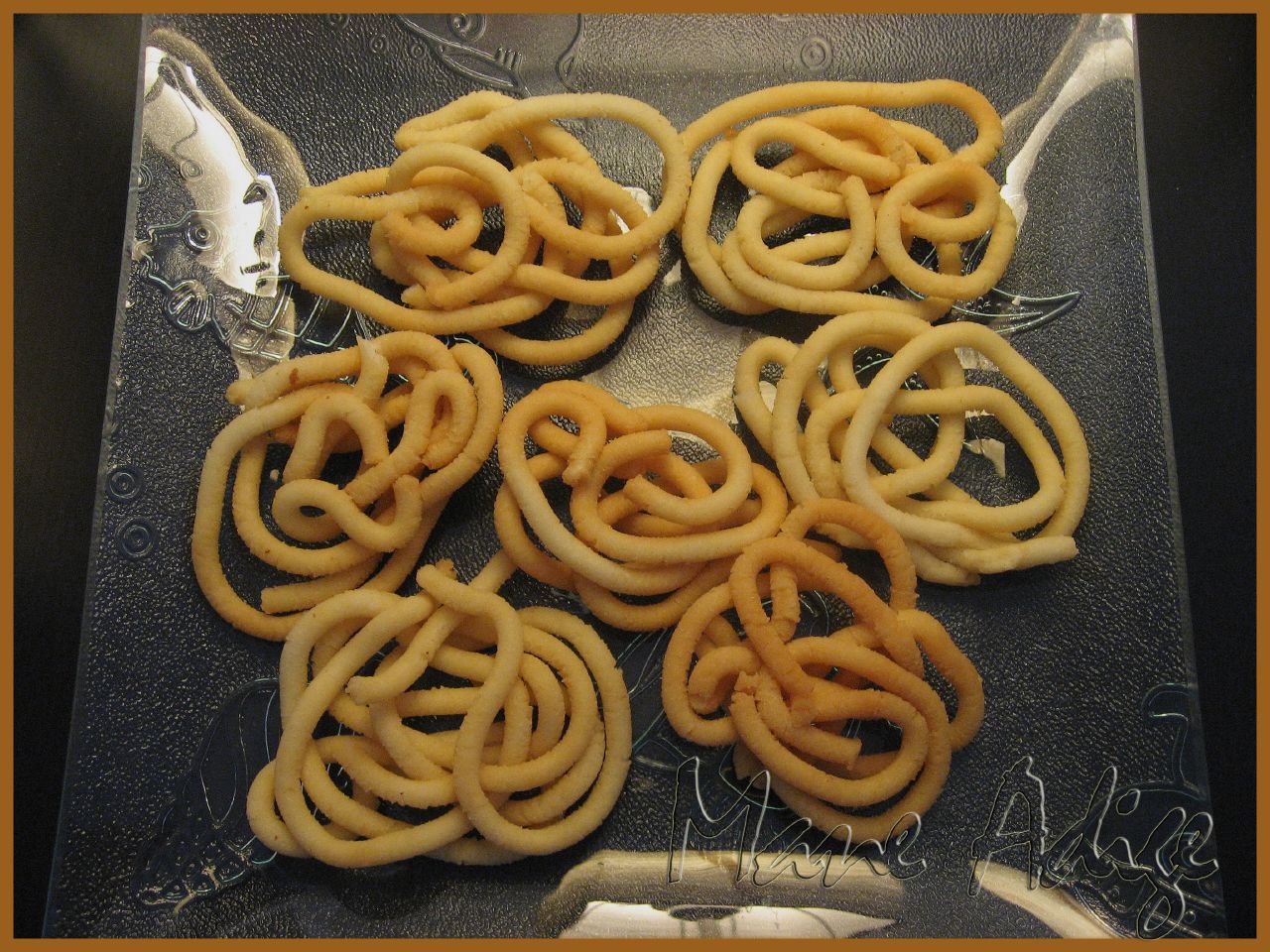
        

A deep fried snack for you guys today! Theingolalu is a deep fried snack that's very similar to chakli. While chakli is more widely known and is relished by everyone all over India, this one is more authentic and known only in the Mysore - Bangalore regions of Karnataka. The process involved in making Theingolalu is tedious and time consuming, but the end product is delicious! And you know how moms are.... they wouldn't mind going through all the pains, as long as their little one relishes it. Yes, my mom made this for me and brought it along while coming here to visit us! :) I would never have gone through the trouble of making it myself :P Here is how she made it...

Ingredients:

1 cup Urad Dal/ Urad flour

3 cups Uncooked White rice

1 tbsp Butter

1/2 tsp Hing

1 tsp Jeera/Cumin seeds

Salt as per taste

Oil for deep frying

Method:

  1. Wash and drain the rice and Urad dal separately; Spread on paper towels and let dry for about 2 hours.
  2. Dry roast the rice until it turns mildly warm- Make sure not to over roast.
  3. Powder the rice and Urad dal separately in a blender; DO NOT add any water while powdering. Note: If you are using Urad flour, you could skip step 1; Follow step 3 for rice only and continue with the next step.
  4. Mix both flours, melted butter, salt, cumin seeds and knead into a dough- Add water as required; The dough should be of the same consistency as of the poori dough, or slightly thicker than the chapati dough.
  5. Stuff the dough into the traditional chakli press/maker; Press into circles of desired shape.
  6. Heat oil in a heavy bottomed pan; Drop them one by one and fry on medium flame until they turn lightly golden in color.
  7. Drain on paper towels and let cool; Store in air tight containers. Relish with tea/coffee or just as is.

Tip:

  • If you have enough time in hand, make the rice and urad powders and set them aside for a couple of days before you proceed with making Theingolalu. The color and texture turns out better this way.
  • If you have access to to any flour mill, it would be a good idea to get the urad dal and rice powdered at the mill instead of using the blender.... You would have a finer and smoother powder this way.
  • The Urad-Rice mixture can be made well in advance and stored/frozen for almost a year; So when you have guests over, all you need to do is knead it into a dough and then deep fry; Theingolalu would be ready in just a few minutes!
  • Theingolalu can be stored in air tight containers for up to 3-4 weeks!
  • Traditionally, the "bille" (the circular, detachable bottom portion of the chakli press containing perforations, through which the dough oozes out) used for theingolalu contains three medium sized circular perforations, while the "bille" for chakli contains only one star shaped perforation. Every Chakli press comes with multiple "bille"s of various types and perforations, So you could choose whichever suits you best.

Makes: About 25-30 Theingolalu;

Prep Time: About 60-90 mins, excluding soaking time;


Monday, June 1, 2009

Aviyal

Aviyal, as most of you would know, is a Kerala speciality dish. Dakshina Kannada (Mangalore-Udupi) cuisine is highly influenced by Kerala cuisine because of its proximity to Kerala. Aviyal is one such adaptation. While Aviyal is made thick and "sabzi/palya" kinds in Kerala, it is more of a gravy in Karnataka. With a whole lot of veggies, this dish is healthy, nutritious and quite easy to make! Serve with some hot steamed rice and it makes a wonderful comfort food.

Ingredients:

2 cups Mixed veggies, chopped into 1" pieces (green beans, carrots, tindora, potatoes etc)

1/2 cup Grated coconut, fresh/frozen

1 cup Yogurt/Sour curd

2-3 Green Chilies, low to medium spiced

1 tsp Jeera

1-2 tsp Oil

1 tsp Mustard seeds

4-5 Curry leaves

A pinch of Hing

Salt as per taste

Method:

  1. Boil the veggies with some salt and water until tender and cooked; Drain the cooked veggies and retain the excess water.
  2. Grind coconut, jeera and green chilies to a smooth paste with some water.
  3. Add the masala paste to the cooked veggies and boil for a minute; Add salt and mix well.
  4. Switch off the stove and add yogurt; Add some of the retained water from the cooked veggies to get the desired consistency; Mix well and adjust ingredients according to taste.
  5. Temper with mustard seeds, curry leaves and hing; Serve with hot steamed rice and relish.


Wednesday, May 20, 2009

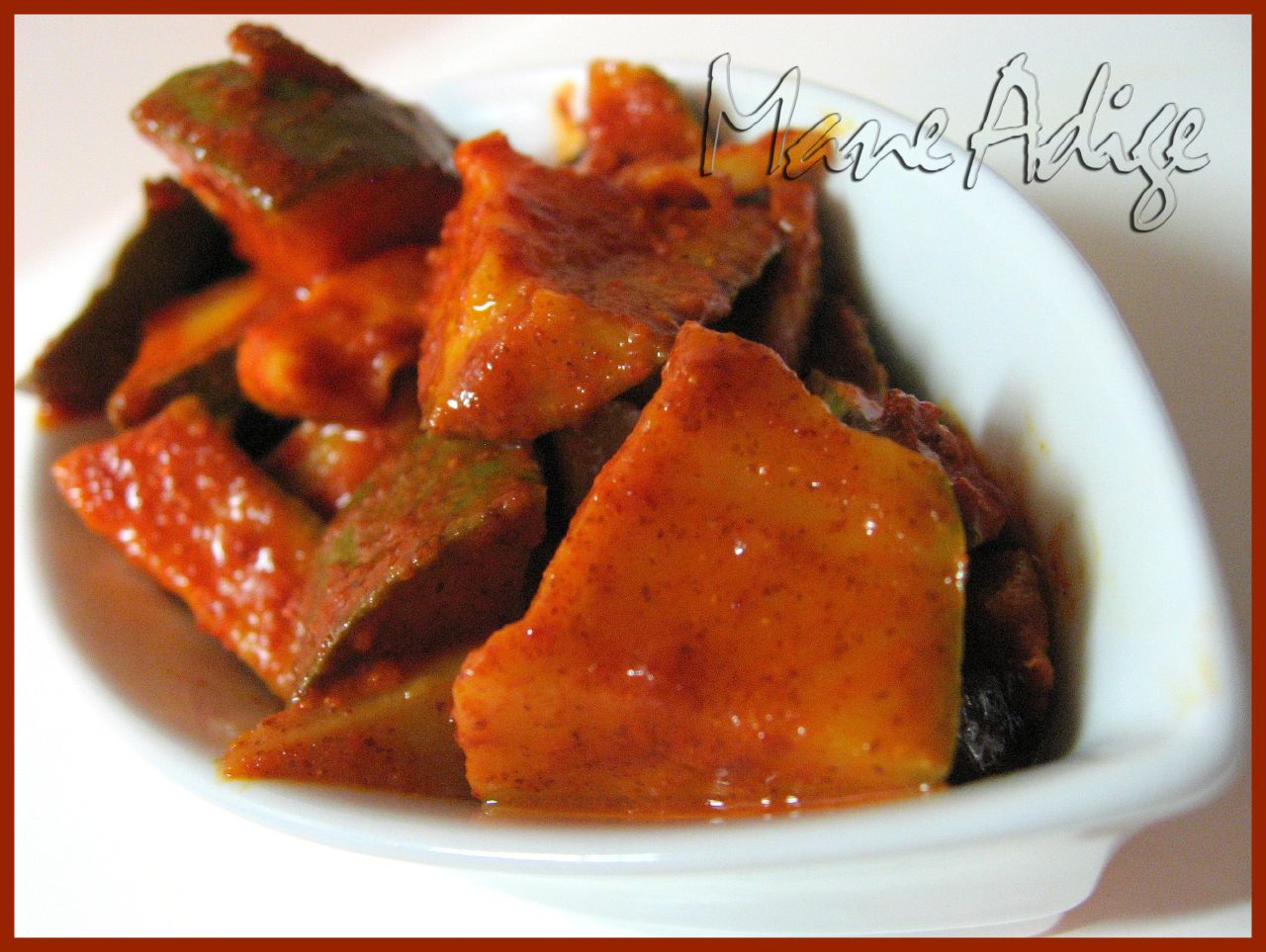
Maavinakai Kette Uppinakai (Instant Raw Mango pickle)


Pickles are something that everyone loves!!!!  As a child, I would have pickles with almost everything - idlis, dosas, plain rice & ghee, rotis or even bread!! :D And we always had a jar of home made pickles at home. In fact, I hadn't tasted store bought pickles until I shifted to the hostel during my Engineering days!! Amma makes different varieties of pickles and the one I have for you today is the simplest of all. Its fast, easy to make, takes very few ingredients and you need not have to wait for too long before you can start relishing it.... And it is also one of my favorites!!! :) Here's how Amma makes it....

Ingredients:

3 Raw Mangoes, medium sized

3tsp Mustard seeds

30 Dry Red Chilies, low to medium spiced

1tsp Powdered Hing

1 tsp Haldi/Turmeric

Salt as per taste


Method:

  1. Wash and cut mangoes into 1 inch cubes; In a glass jar, spread some of the cubes and sprinkle some salt over it; Add few more cubes and make another layer; Sprinkle some more salt ; Repeat the process for the remaining mango cubes and keep aside.
  2. Powder the mustard seeds and red chilies to a fine mixture; Add hing, turmeric and mix well. Note:DO NOT add any water while powdering the spices in the blender/mixie.
  3. Add the powdered spices to the mango-salt mixture and mix well with the help of a long spoon; Close the lid of the jar tightly. Relish with idlis, dosas,akki rottis, curd rice.

Tips:

  1. Choose mangoes carefully; The mangoes should be sour and hard.
  2. The pickle may seem a little dry on the first day, but DO NOT add any water; the mangoes will give out enough water in a day or two;
  3. Though this pickle can be eaten with any south indian dish, curd rice & pickle is the most famous combination.
  4. Though this pickle is sort of instant and can be used right away, it tastes great after a couple of days when the mangoes would have absorbed the masalas.
  5. This pickle cannot be stored for too long; Its average shelf life is about 1-1.5 months. As days go by, the mangoes would start becoming soft and start dissolving in the gravy.

Prep Time: About 30-40 mins;

Makes: Roughly enough pickle to fill a 450-500 ml bottle;